
Why Multi-Functional Rooms Are Essential
- ✓ Maximizes Space: Increases usability
- ✓ Enhances Flexibility: Adapts to shifting needs
- ✓ Increases Home Value: Boosts market appeal
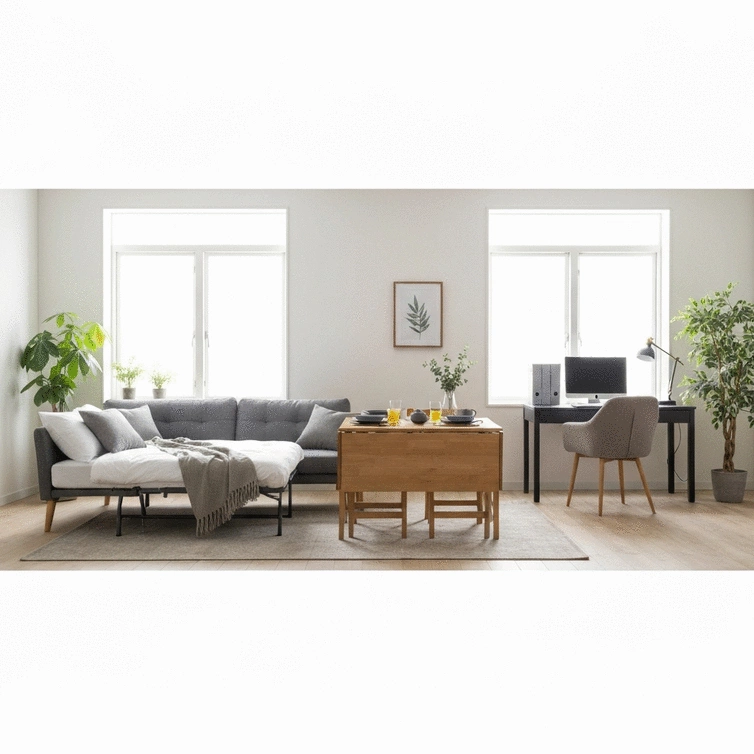
As families evolve, so do their living space requirements. Have you considered how adaptable rooms could enhance your daily life? Let’s delve into the essentials of creating multi-use spaces that grow along with your family.
This visual highlights the key advantages of multi-functional spaces and showcases how diverse rooms can be transformed to meet evolving family needs.
As families grow, so do their needs, and that often means rethinking how we use our living spaces. Multi-functional rooms are essential for modern families looking to maximize their home’s potential while ensuring comfort and functionality. Whether it’s a cozy corner for doing homework or a vibrant area for family game nights, understanding how to create adaptable living spaces can make a significant difference in daily life.
At The Homeowner's Compass, I believe that the right design can turn a standard room into a dynamic space that grows with your family. So, how do we start? Let's explore why multi-functional rooms are essential and how to identify the needs of each family member.
With more families embracing flexible lifestyles, the demand for multi-use spaces in homes is on the rise. This evolving trend allows families to utilize areas for various purposes, whether that’s hosting friends, working from home, or providing a safe play area for children. Research indicates that designing for flexibility is key in modern homes, allowing spaces to evolve with family needs, as highlighted in a recent article on Frontiers in Built Environment.
Ultimately, these spaces not only improve the overall quality of life but also foster family interaction and connection, making them a vital part of your home’s layout. This approach aligns with the idea that housing design needs to evolve to meet contemporary demands, a point discussed by the Lincoln Institute of Land Policy.
Every family is unique, and so are their needs. It's essential to consider the perspectives of all family members when planning your multi-use spaces. What does each person require for their daily activities? For instance, a toddler might need a safe play area, while a teen may seek a quiet spot for studying.
By identifying these needs, we can create a comprehensive plan that ensures every family member feels included and comfortable in shared spaces.
Your family’s lifestyle plays a significant role in how you plan your living areas. Are you an active family that values gatherings, or do you prefer quieter evenings at home? Understanding your lifestyle can help you make informed decisions about your space. The flexibility of our homes to support our well-being is a growing concern, as explored by the Housing Studies Association.
Reflecting on these aspects will enable you to craft spaces that not only serve practical purposes but also cater to the emotional well-being of your family.
As you think about your family's needs in multi-use spaces, what features are most important to you? Share your thoughts below:
Transforming your home into a multi-use space can be an exciting yet overwhelming journey. I often hear from families who want to maximize their living areas while maintaining comfort and functionality. With the right inspiration and strategies, you can create a harmonious environment that meets the needs of everyone in your household!
One of the best ways to understand how to approach your multi-use space is through real-life examples. Many homeowners have successfully converted their underutilized rooms into vibrant, functional areas. For instance, a family I worked with turned their basement into a cozy playroom that doubles as a movie theater! Here are a few inspiring transformations:
These cases highlight the beauty of adaptability in home design. Each family made thoughtful changes that reflected their unique lifestyle and needs, proving that with creativity, any space can be transformed!
To further understand the importance of adaptable living spaces, I consulted several industry experts. Their insights shed light on the trends and techniques that can guide your design decisions:
"Designing for flexibility is key in today's homes. Families grow and change, and their spaces should do the same!" — Sarah Johnson, Interior Designer
"Incorporating elements like modular furniture or movable partitions allows homeowners to create dynamic living environments that cater to their evolving needs." — Mark Thompson, Architect
These quotes echo the philosophy at The Homeowner's Compass: your home should be a reflection of your family’s journey, evolving with you through various stages of life.
When it comes to designing multi-use spaces, aesthetics play a crucial role. Not only do you want a functional area, but you also want it to be visually appealing and comfortable for everyone. Choosing colors, textures, and decor that resonate with your family can make a world of difference. Here are some tips for enhancing aesthetic appeal:
By carefully considering aesthetics, you can create a multi-use space that is not only practical but also a joyful retreat for your family!
Here is a quick recap of the important points discussed in the article:
Explore Industrial Real Estate Virtually

In an age where technology shapes our experiences, industrial real estate virtual tours are transfor
Understanding Pointcloud 3D Data

As 3D technology reshapes our understanding of physical spaces, mastering 3D point cloud data is mor
Site Measuring for Architects Explained
What if the success of your architectural project hinged on a simple yet crucial step? Site measurem

Explore Industrial Real Estate Virtually
Understanding Pointcloud 3D Data
Site Measuring for Architects Explained
Understanding LiDAR Technology Basics
Understanding Production Layout Basics